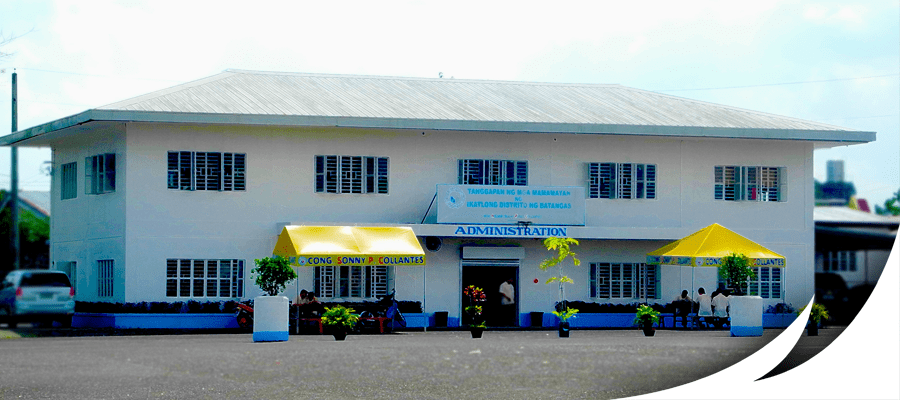
In the early 20’s, Batangas had only one public high school. This was located in the Provincial Capital, consequently very few could afford to obtain high school education. This situation spurred some prominent citizens of Tanauan to establish a private high school to meet the needs of the graduates from the elementary schools of Tanauan and neighboring towns. A corporation was formed and Dr9. Jose P. Laurel was elected President of the Board of Trustees with Dr. Gaudencio Garcia, Dr. Francisco Onate, Dr. Juan V. Pagaspas, and Deputy Collector of Internal Revenue Alfredo L. Yatco as members. Dr. Pagaspas was appointed Director of the school. The new school, which was named Tanauan Institute, offered the first year and second year of secondary education on June 02, 1924. Subsequently, the Institute received full recognition to offer a complete high school course. It held its first commencement exercises on April 09, 1927.
World War II broke and the school was temporarily closed. By 1945, the American liberation forces arrived in Batangas Bay. The Japanese retreated by massacred civilian caught in their path. Dr. and Mrs. Pagaspas were among the unfortunate victims of the February 10 massacre. After liberation, the corporation was organized with Mr. Vicente Sabalvaro as the President of the Board of Trustees and Mr. Apolonio Magsino, Dr. Salvador C. Laurena, Dr. Apolonio Lirio and Dr. Jose Panganiban as members. Amnesty was granted to Dr. Laurel and once more he assumed the Presidency of the Board of Trustees. Upon his suggestion, the site was bought and a concrete structure was erected. Beginning with the school year 1951-1952, classes had been held in this building. Mr. Apolonio Magsino was elected President of the Board of Trustees in January 1960 after the death of Dr Laurel on November 06, 1959.
Motivated by the same objectives, which prompted the founders of Tanauan Institute, the 1967 Board of Trustees made a forward step when it established the Collegiate Department beginning year 1967-1968. The Institute offered the following courses: Bachelor of Science in Commerce and Diploma in Secretarial Science. It was hoped that with the establishment of the Collegiate Department, the Tanauan Institute would be instrumental in providing equal education opportunity for all.
In 1988, upon the assumption of Mr. Andy I. Macasaet as Chairman of the Board of Trustees, the school expanded its program by offering Nursery, Kindergarten, Grades I-IV, under the Pre-Elementary and Elementary Departments. Technical Vocational courses such as Automotive and electronics were offered. Short term Computer courses like Basic Computer System, Word Processing, Basic Programming, Lotus 1-2-3, Dbase III, and Pascal were also opened.
In 1990, the Elementary Department has completed its course offerings with the addition of Grade VI while Bachelor of Elementary Education and Graduate in Midwifery has been added to College programs. Further expansion of the physical facilities was also made during the year, through the construction of the fourth floor as additional storey to the main building.
The most significant expansion was achieved in 1991 when the school was granted by the Department of Education, Culture and Sports the Authority to offer Master of Arts with English and Filipino as areas of specialization.
In 2003, under the leadership of Dr. Nelson P. Collantes, Tanauan Institute relocated to a much larger campus with five fully equipped school buildings, a gymnasium and a swimming pool facility. The progress of Tanauan Institute is marked by this historical move into the modern era, while keeping the traditional goals and enduring spirit of Tanauan Institute alive.
TANAUAN INSTITUTE seeks to establish a culture of intellectual competence, environmental awareness and socio-civic responsibility. TANAUAN INSTITUTE commits itself to the formation of disciplined and enlightened minds. TANAUAN INSTITUTE aims to help build a nation of great men and women, who shall be accomplished and decorated in their fields.
“Vision”
TANAUAN INSTITUTE envisions itself to be a world class institution dedicated to higher learning and modern research. It hopes to contribute to the humane and holistic development of the Filipino youth through toptier quality education. TANAUAN INSTITUTE strives to produce socially and morally upright individuals in a globally competitive environment.
Objectives
To develop the student’s inherent competence, intelligence and discipline.
To instill in them strong moral values and convictions for their total personality development.
To search for knowledge in various areas of specialization which, eventually contributes to the socio-cultural and economic progress in the community.
Tanauan Institute (TI), Inc. is a private higher educational institution in Batangas. It was founded in 1924 to serve as another secondary school provider in the city. In 1967, the institute opened the Collegiate Department with courses in Commerce and Secretarial Science. The establishment of the college department was later followed by that of the Preschool and Elementary Departments in 1988. Short-term and technical courses were also offered at that time.
At present, the institute offers undergraduate programs in Criminology, Teacher Education, Accountancy, Business Administration, Computer Science, and Tourism Management. The high school department of TI includes a Senior High School (SHS) program with curricula in the Academic and the Technical-Vocational-Livelihood (TVL) tracks. Additionally, a Master’s program in Education is available for college graduates who wish to pursue further studies.
For 95 years now, Tanauan Institute has been producing competent and socially responsible professionals who contribute to the economic development of the community. The institution continues to build on and to improve its programs to be able to provide quality and holistic education to the youth.
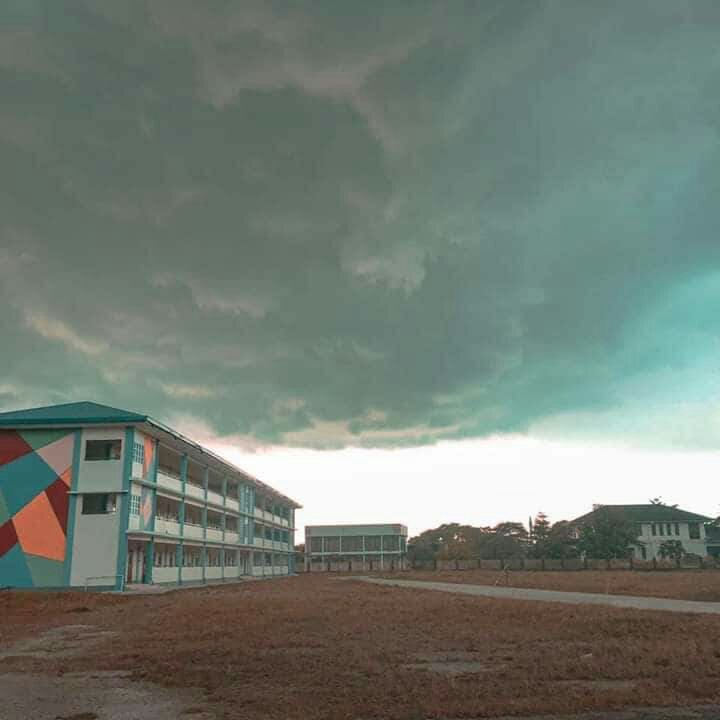
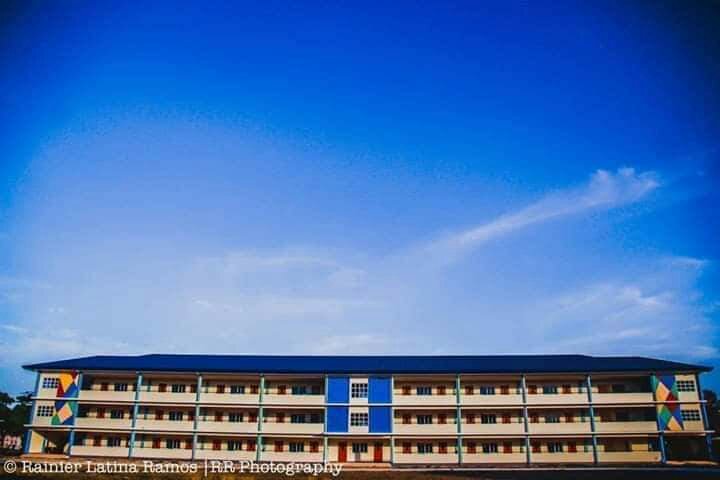
Beautifull view 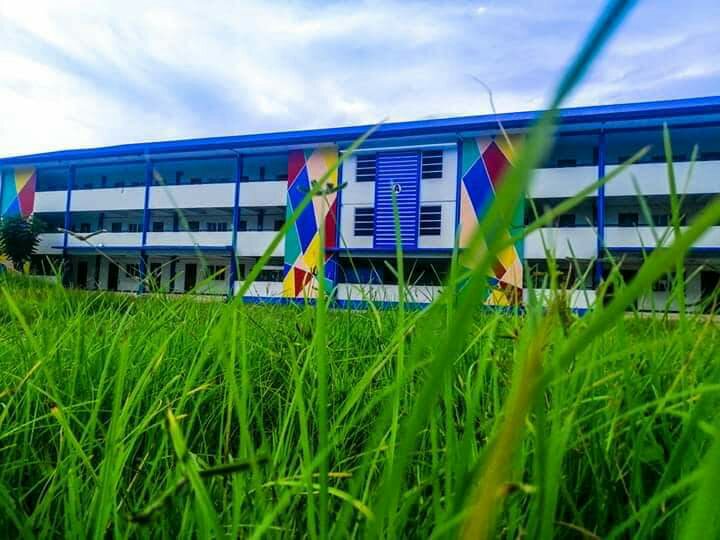
Colorfull 
Inside this classroom have a aircon and chair and whiteboard that can help student to feel comfortable in there study, and theres have many comfort room in this building.
Tanauan Institute Strand offer.
What are the Humanities ?
Put simply, the humanities could be described as the way that we, as a race, understand and document the human experience. Courses that study culture, religion, philosophy, and history fall under the humanities.
In the film Dead Poets Society, Mr. Keating said:
We don’t read and write poetry because it’s cute. We read and write poetry because we are members of the human race. And the human race is filled with passion. And medicine, law, business, engineering, these are noble pursuits and necessary to sustain life. But poetry, beauty, romance, love, these are what we stay alive for.
If you find yourself agreeing with this statement, surely, you’re looking at the right strand.
Some schools would also include the fine arts under the humanities since art acts like stamps of culture. To illustrate, if geologists have carbon dating (a method of calculating the age of extremely old objects by measuring the amount of a particular type of carbon in them), the humanities have fine arts.
“HUMSS Course List: Humanities”
AB Creative Writing: There is an art to articulation. Creative writing is not limited to fiction, rather covers how you would tell a story, be it real or otherwise.
BA Film: What better way to immortalize the human experience than through film? Learn the techniques of effective visual storytelling through this course.
AB History: History is more than just names, dates, and places. It also covers the context and implications of what has happened, and what it could learn from it today. Take this up, and you’ll see just how history does repeat itself.
BA Humanities: Develop a deeper passion for history, philosophy, literature, and the arts, and examine why these disciplines are what make us human.
AB Literature: This course aims to develop deeper critical thinking and give all the right tools for proper literary analysis. In this era of fake news, we need more of that.
Bachelor of Music: Music has several different tracks under it, from composition all the way to the theory behind it. You’ll never listen to k-pop or rap the same way again.
AB Philosophy: In Greek, philia means “love,” and –sophos means “wisdom.” However, this course goes beyond just loving wisdom. It also tackles how to apply these in our lives.
BFA Theater Arts: More than just playing pretend, theater is a vehicle for social commentary and conversation. It has tracks like acting, directing, and production design meant to equip you with the means to tell the most gripping stories of humanity.
AB Theology: Also derived from Greek, Theos means “God” and –logia means “sayings.” Theology is the study of God. There are different ways to interpret scripture after all.
AB Interdisciplinary Studies: This course is as unique as every student who chooses it. It allows you to take courses from different programs of your choice — allowing you to bring out your true potential!
What are the Social Sciences?
The social sciences have a misleading moniker — the “soft” sciences. Unlike the natural, or “hard” sciences — such as physics, chemistry, and biology to9 name a few — which aim to explain the physical world, the social sciences explore how we move in that world.
However, don’t be fooled by the nickname. As a matter of fact, there is nothing soft about it. Everything is driven by data. How else could you make an objective analysis of populations and groupthink behavior? From that data, social scientists make recommendations on how a community can take action and improve their way of life.
“HUMSS Course List: Social Sciences”
AB Anthropology: Anthropos (also Greek), means “human.” With that, anthropology is the study of human behavior and societies. It puts context in the norms and values we have as a society today.
AB Communication Arts: Communication as a course that teaches its students how to use the media we have today (including social media!) effectively and responsibly.
BS Community Development: This course is tricky because some universities categorize it under management. Understandable, given how much of it is planning and execution, but to do that effectively, students have to learn how to interpret data and talk to communities to properly address their needs.
AB Economics: Economics is also sometimes categorized under business and management, but on top of all the accounting and the numbers, you’d also be studying a lot of economic theory to understand what makes what move in economies.
Bachelor of Elementary Education: Or any education degree for that matter usually comes with a major in a particular subject. Remember your favorite teacher? You could have the same impact on future students’ lives.
BS Geography: A common misconception is that geography is all about maps. That’s cartography, and it’s just one aspect of the whole thing. Put very crudely, geography studies how the physical features of the Earth and the atmosphere, and how it affects and is affected by humans.
BS Human Capital Development: Do you like bringing out the best in people? This course teaches its students how to design, conduct, and manage programs and activities that will help people improve their performance, productivity, and employability.
AB International Studies: If you’re after an illustrious career in foreign service (UN, Embassies, DFA, etc.) then this is the course for you. Typically, on top of your major subjects, you’d be taking electives on the language, culture, history, and politics of the country you want to specialize in.
BA Linguistics: Remember those elementary English classes where we were taught about nouns, verbs, and adjectives? Now imagine a hardcore version of that where you break down every word to its very sound and learn the nuances of language based on how these words are used.
AB Political Science: Political science focuses on the theory and practice of government and politics at the local, national, and international levels. Game of Thrones can be real. We have to play it even smarter.
BS/BA Psychology: Psychology is the study of mental states, processes, and behavior. The difference between a Bachelor of Science and Bachelor of Arts degree in psychology is usually the number of science or lab units you’ll be taking. The Bachelor of Science in Psychology can usually qualify as a pre-med course.
AB Sociology: Sociology, similar to anthropology, also studies the behavior of humans within societies, their key difference being that sociology focuses on society, and anthropology focuses on culture.
Okay, but where do I go after graduation?
Practically speaking, you could go into the following fields, just to name a few:
Law
Education
Advertising
Public Relations
Publishing
Museum Curation
Journalism
Government
Human Resources
International Relations
If you don’t see the field you were hoping for, don’t fear. Graduates of HUMSS courses tend to be very flexible. The disciplines develop mindsets and principles that would make you a very desirable hire. For example, your ability to communicate and think on the fly would be invaluable to any company or organization you approach. It’s all a matter of getting creative with your first interview.
“STEM”
Science, Technology, Engineering & Mathematics
“About this Strand”
This strand will develop the students’ ability to evaluate simple to complex societal problems and be responsive and active in the formulation of its solution through the application and integration of scientific, technological, engineering, and mathematical concepts as it prepares them to pursue college degrees that focuses on the enigma of the natural world thereby leading them to become future scientists, technological analysts and experts, engineers, mathematicians, programmers, and the like.
College Degree Program
Leading to programs in:
Engineering
Information Technology
Computer Science
Architecture
Pure Sciences (Physics, Chemistry, Biology)
Teacher Education Major in Sciences
Mathematics
Medical Sciences (Nursing, Medical Allied Programs)
Mathematics (BS-Mathematics)
Accountancy,Business and Management
“About this strand”
This strand is designed as an introductory course in accounting and business and management where students are trained to think logically and scientifically and are acquainted with the rudiments of accounting, business and management concepts and principles in order to prepare them to pursue college degrees that focus on business and industry where their contribution as future accountants, entrepreneurs, and business leaders are vital to the progress and development of the economy and critical to the promotion of a sustainable green business.
College Degree Program
Leading to programs in:
Accountancy
Management Accounting
Banking and Finance
Business Administration
Marketing
Entrepreneurship
Human Resource Development Management
Hospitality Management
Tourism
Information and Communication Technology Strand
Ever dreamed of becoming an animator?
Interested in stepping into a career in the tech industry in the future? Taking the Information and Communication Technology strand might be the right path for you! But what is it all about and how can you benefit from it? Here are some of the important things you might want to read about this strand:
What do you need to know about ICT strand?
Information Communication and Technology or ICT strand is one of the strands offered in the Technical-Vocational-Livelihood (TVL) Track in senior high school. It is designed to provide you with the technical skills and knowledge in using tools and equipment that allows people to interact in the digital world.
Under this strand, you will learn relevant skills and knowledge in various disciplines such as illustration, web designing and computer programming. ICT can also help you hone additional skills that you can use for employment especially if you are eyeing a career in the creative industry like animation, technical drafting or java programming. Aside from these, some of the other areas that you will learn in ICT include telecom installation and medical transcription.
The best thing about this strand is that you can earn a National Certificate on each subject, provided that you pass the assessments from TESDA. National Certificates can help boost your chances for employment in the future.
What college courses or degree programs can I take after Senior High School?
If you are planning to further your studies, here are some of the degrees that you can take for college:Computer Engineering
Information Technology
Software and Network Engineering
Multimedia Arts
Digital Illustration and Animation
Graphic Arts
What are your possible professions?
Information Communication and Technology or ICT strand can provide you with a wide range of options when you graduate. Right after you finish this strand, you can already apply for a job. Here are some of the careers that you can enter in ICT:
Data Encoder
Junior Programmer
Customer Service Representative
Computer Technician
Radio Technician
Web Designer
Software Developer
Web Developer
Application Developer
Game Designer
Telecommunications Engineer
A bartender is someone who mixes and serves drinks to customers, either directly from patrons at the bar, or through waiters and waitresses who place drink orders for dining room customers. They must know a wide range of drink recipes and be able to mix drinks accurately, quickly, and without waste. Bartenders work in restaurants, bars, clubs, hotels, and other food service establishments.
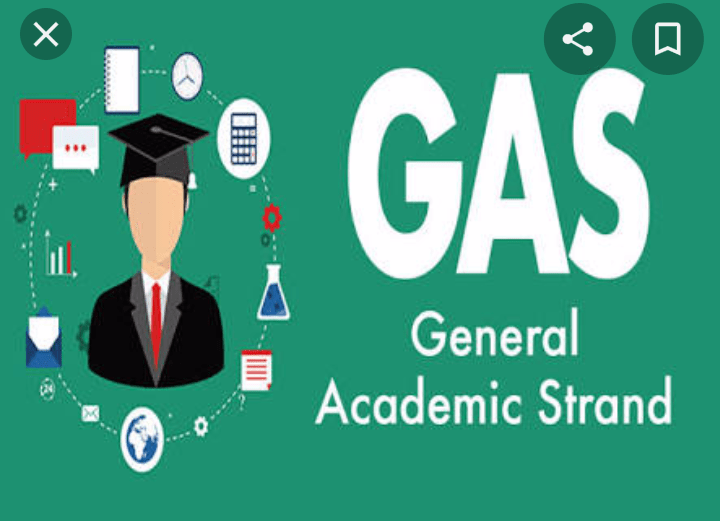
The General Academic Strand or GAS is one of the four strands of the Academic Track for Senior High School. Unlike the other career-specific strands, GAS is designed for students who are not decided yet on what course they want to take in college. In this strand, you can choose from the electives of the different tracks such as Applied Economics, Organization and Management, Humanities, Social Sciences, and Disaster Preparedness.
Since GAS is not focused on only one specific path, it provides you with a number of opportunities after you graduate

Technical Drafting is designed to develop the skills for one or more engineering drawing specialties. Students start with basic drafting procedures and techniques coupled with a general exploration of the field. Specialization in areas such as architectural drafting, civil engineering, piping schematics, machine design and other disciplines are encouraged in the third year. This program may be used to prepare for entry-level work or post-secondary training. In preparing drawings, students use computers, compasses, dividers, parallel edges, scales, triangles, and 3-D modeling. Computer drafting techniques include AutoCAD, Architectural Desktop, Inventor, Revit, Solidworks, Soft Plan, 3D Studio, and Auto-Desk Design Academy. Technical handbooks, tables and calculators are also used to help solve problems.
Tanauan Institute Uniform.
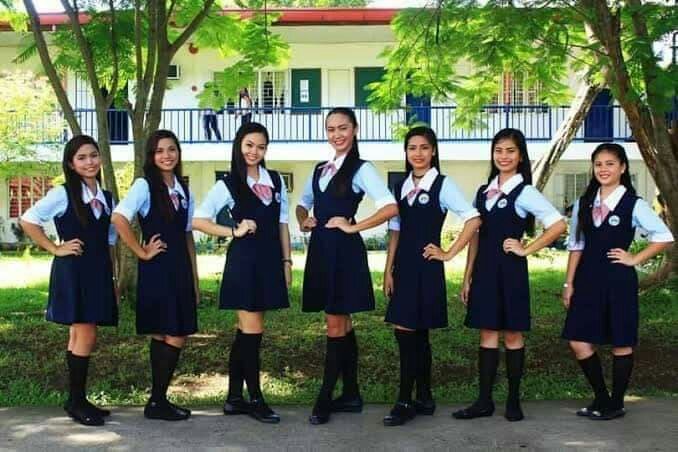
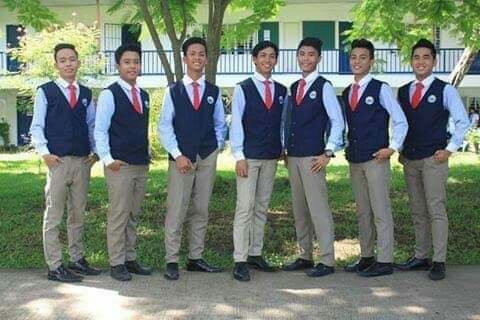
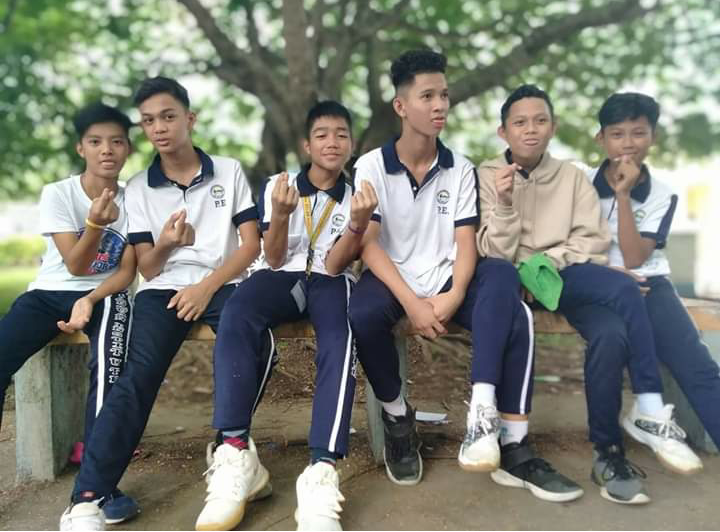
Classrooms are bright, colorful, busy places where school desks are a thing of the past. Instead, classrooms are furnished with tables and chairs that provide children with a variety of opportunities to learn to work together as a team a community in which each has responsibilities.
Children are referred to as readers” or writers” or scientists” rather than students.
At the end of the day, children celebrate by spending quality time reflecting with their teacher on what they have learned about a topic or what they have learned about themselves as readers or writers.
Often classes of students loop together with their teacher from one grade to the next, continuing that sense of community that teachers work so hard to foster.
Teachers Teas have become a popular and welcomed after-school respite for staff members who seize the opportunity to get together to review books that have recently arrived
Parents and grandparents feel” our community environment and are comfortable visiting our school to have their child, volunteer in a classroom, or attend a special school event.
specially our facility responsive to the changing programs of educational delivery, and at a minimum should provide a physical environment that is comfortable, safe, secure, accessible,
like the computer labs, Gym, Swimming pool, Cr , and others things that are so usefull
the teachers joint effort for modern study for there children/ Student for a modern school knowledge teachers help there student to have higher grade and giving their best effort. Tanauan Institue is the best School that gave you a High Quality Education.
So what are your waiting for choose Tanauan Institute, to achieve your dream.
 TheOnethatGotAway